Global Alliance for Improved Nutrition (GAIN)
  • About
    • About GAIN
    • Vision and mission
    • Strategy
    • Core values
    • Policies
    • Malnutrition
      • Definition
      • Quick facts
    • Partnerships
      • GAIN Nordic Partnership
      • Global Fortification Data Exchange (GFDx)
      • Act4Food Act4Change
      • Demand Generation Alliance (DGA) for Nutritious, Sustainable Foods
      • Zero Hunger Private Sector Pledge
    • Leadership
      • Strategic Management Team and Country Directors
      • Board of Directors
      • Partnership Council
      • Get to know our executive director
    • Sustainable Development Goals
    • Donors
      • Support us
  • Impact
    • Stories of Impact
    • Programmes
      • Food Fortification
        • Overview
        • Large-Scale Food Fortification
        • Commercialisation of biofortified crops (CBC)
      • Nutrition Enterprise Unit
        • Overview
        • Nutrition Enterprise Development
        • Nutritious Foods Financing (N3F)
        • SUN Business Network (SBN)
        • Integrated value chain development for nutritious and safe foods
      • Drivers of Food Systems Transformation
        • Overview
        • Demand Generation
        • Social Protection
        • Innovation for Health and Planet
        • Environment
        • Food systems resilience
        • Children and Young People
        • Workforce Nutrition
      • Policy and Governance
        • Overview
        • Accountability, planning and prioritisation
        • Food systems governance
      • Outcomes
    • Countries
      • Country Offices
        • Bangladesh
        • Ethiopia
        • India
        • Indonesia
        • Kenya
        • Mozambique
        • Nigeria
        • Pakistan
        • Tanzania
      • Representative Offices
        • Denmark
        • The Netherlands
        • United Kingdom
        • United States of America
      • Headquarter
        • Switzerland
    • Our response to COVID-19
  • Resources
    • Publications
      • Reports and Publications
      • Datasets
      • Annual reports
      • Nutrition Connect
    • Multimedia
      • Videos
      • Bite the Talk - GAIN Podcast Series
      • Glossary
      • Brand identity
    • Newsroom
      • News releases
      • Blogs
      • Statements
      • Speeches
      • Programme and project updates
      • Interviews
      • GAIN in the news
    • Stories
  • Events
    • Browse all our events
    • GAIN @IUNS - ICN
    • GAIN celebrates International Women's Day
    • GAIN@COP27
    • Future Fortified
    • GAIN Interview Cruncher Series
    • 2021 UN Food Systems Pre-Summit
    • Nutrition for Growth (N4G) Summit
  • GAIN@20
  • Careers
  • Request for proposal
  • Financials
  • Donate
  • Contact us
  • FAQ
  1. Home
  2. About
  3. Leadership
  4. Get to know our Executive Director
  5. Blogs

Blogs

Three reads of the EAT-Lancet Commission Report

Three reads of the EAT-Lancet Commission Report

The EAT-Lancet Commission is the first robust, extensive review of the evidence combining criteria for healthy dietary changes with environmental analyses of food system’s impacts, to find common ground that results in recommendations for food systems transformation. It is an impressive piece of work; a daunting task to include all the key components and supporting analyses into a single journal article.
The EAT Lancet Report: landmarks, signposts and omissions

The EAT Lancet Report: landmarks, signposts and omissions

First, how do we have to eat differently to significantly reduce malnutrition? Second, what food production systems do we have to put in place to use natural resources sustainably and live within climate change targets? The EAT Lancet Report is a landmark because it answers these two questions simultaneously.
Youth are the future: they are also the present

Youth are the future: they are also the present

Too often we stop at “you are the future” and of course that is true, but whether a high school student or an early career professional, these young people are the present. They have tools like social media to mobilise and organise and speak out, they have computer literacy to design apps that can promote accountability and transparency, they have an ability to multitask and they have numbers.
SUN membership is relevant for ALL countries, no matter their income level. Here’s why.

SUN membership is relevant for ALL countries, no matter their income level. Here’s why.

Since 2010, the Scaling Up Nutrition (SUN) Movement has inspired a new way of working collaboratively to end malnutrition–in all its forms. And yet, 1000 days into the SDG era, no high-income country has become a member of the SUN Movement. Why does this matter? Joining SUN will help high-income countries achieve greater coherence in their battle against malnutrition.
Food safety and healthy diets: docking, colliding or passing in the night?

Food safety and healthy diets: docking, colliding or passing in the night?

Food safety issues have almost no visibility. This is very strange on both counts. As the presentations at the Pontifical Academy of Sciences – GAIN technical workshop in the Vatican made clear, food safety threats are on the rise as food systems modernise but the capacity to control those risks lags behind.
Making the most of the current window of opportunity for nutrition in Pakistan

Making the most of the current window of opportunity for nutrition in Pakistan

I just returned from a trip to Islamabad to meet the GAIN team and some of our partners. I’m no expert on Pakistan, but compared to 2013, the commitment to accelerate reductions in malnutrition seems to have increased significantly. Nutrition is reported to be much more prominent in the next 5 year draft National Development Plan which is waiting to be ratified by the new Government elected in late July.
Adolescents as nutrition catalysts: a fire has been lit!

Adolescents as nutrition catalysts: a fire has been lit!

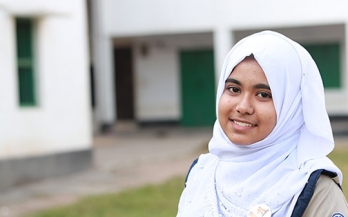
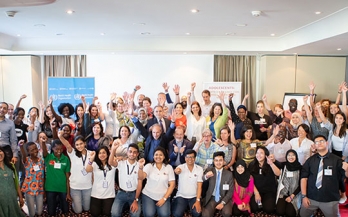
A couple of weeks ago GAIN and the World Health Organization (WHO) organised a consultation “Adolescents: Agents of Change for a Well Nourished World”. This was the third in four “stepping stones” towards forging a consensus on promising approaches for programming to improve adolescent nutrition outcomes. The x-factor in the consultation was the participation of 10 adolescents from Bangladesh, Indonesia, Pakistan and Zambia.
The man who nourished the world

The man who nourished the world

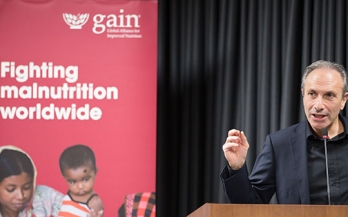
My delight at being told that I was one of 2018’s World Food Prize Laureates was matched only by, well, sheer surprise. It became clear that the contribution being recognised was the ability to be effective in multiple roles in order to help elevate nutrition to the “top table” of development. In other words, to help convince powerful decision makers that good nutrition is fundamental to delivering the Sustainable Development Goals (SDGs).
Packaged foods: what role can they play in improving the consumption of nutritious food?

Packaged foods: what role can they play in improving the consumption of nutritious food?

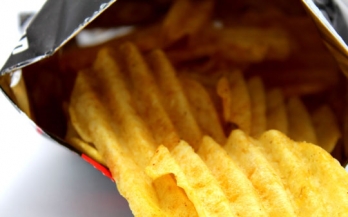
As the 2016 Global Panel Report on Food Systems and Diets noted, average households in nearly all countries in the world acquire the majority of their food from the market. Most of these purchases are of packaged foods. In addition, we know that the sales of processed foods are flat in high-income countries while increasing in middle-income countries.
Are we misusing stunting as a measure of child nutrition?

Are we misusing stunting as a measure of child nutrition?

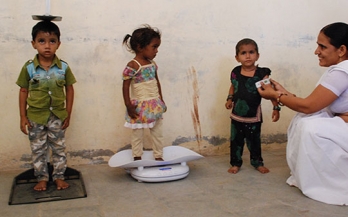
The consistent evidence that childhood stunting is associated with poor child development and school performance and health and human capital development more generally has elevated nutrition in the development agenda. The result has been an unprecedented focus on addressing stunting and some renewed development resources focused on doing so.
Pagination

  • First page « First
  • Previous page ‹‹
  • Page 1
  • Page 2
  • Page 3
  • Current page 4
  • Page 5
  • Next page ››
  • Last page Last »

© GAIN 2026

  • Sitemap
  • Terms and conditions
  • Privacy policy
  • Accessibility
  • Subscribe
  • RSS
  • Follow us

  • Twitter
  • Facebook
  • Instagram
  • Linkedin
  • Youtube