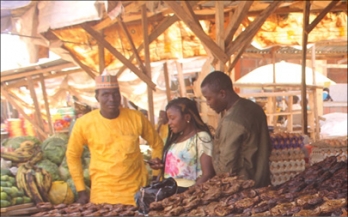
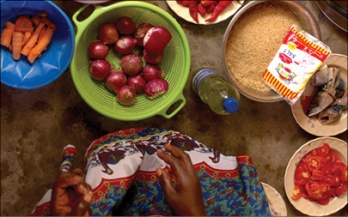
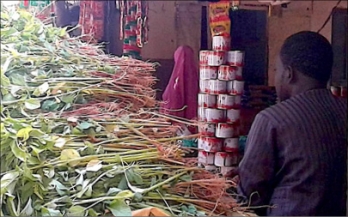
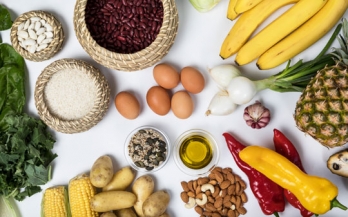
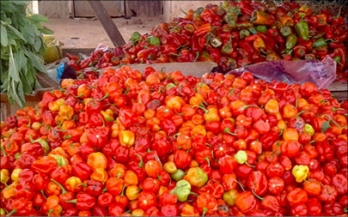
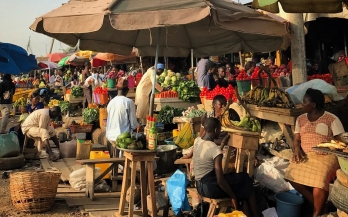
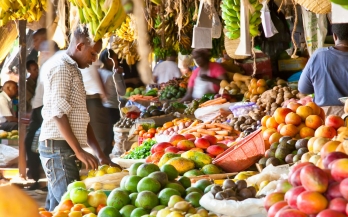
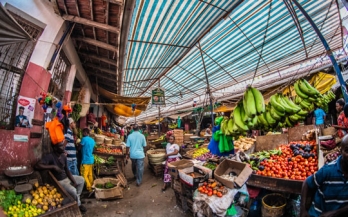
This paper uses detailed data from in-depth interviews with consumers (n = 47) and vendors (n = 37) in three traditional markets in Birnin Kebbi, Nigeria to examine how consumers and vendors identify and avoid or manage food safety risks and whom they hold responsible and trust when it comes to ensuring food safety.
In a study published in the Journal of Foodborne Pathogens and Disease, EatSafe conducted a rigorous scoping review to assess consumer-facing food safety interventions carried out globally over the past 20 years, and categorized and analyzed them by type of intervention, methods, and outcomes to understand which interventions might be effective in changing consumer's knowledge, attitudes, and practices (KAP) towards food safety.
To support EatSafe in Ethiopia by providing insights on prior research on food safety-related perspectives and practices among consumers and food vendors in Ethiopia, a systematic search and review identified 116 articles to include in this synthesis.
This report provides a summary of EatSafe’s 12 global reports and 13 Nigeria-specific products from Phase I of the program in Nigeria, highlighting how the results of the studies have influenced the design of interventions and inform future studies in Phase II of the EatSafe program in Nigeria.
Fruits and vegetables are recommended across all dietary guidelines. Despite the nutrition credentials of vegetables, they remain relatively scarce and expensive in many low-income settings, including across many of the countries where GAIN’s main offices are based.
GAIN’s mission and strategy revolve around the core concept of "nutritious and safe foods". In addition, there is a growing consensus that foods should be produced sustainably - i.e., that one should take into account the environmental impact associated with the production of these foods.
This article, published in the journal Food Control, reviewed 87 relevant studies on the food safety perspectives and practices of consumers and vendors in Nigeria, Africa's most populous country.
This article, published in in the journal Global Food Security, highlights causal pathways through which food safety and nutrition are interlinked (across health and physiology, consumer behavior, supply chains and markets, and policy and regulation), and discusses areas for action.
Policy Options Toolkits are a core output of GAIN’s policy and coordination efforts, under the Keeping Food Markets Working (KFMW) programme. These toolkits were developed through a participatory co-design process with GAIN, conducted in Beira and Pemba (Mozambique), Machakos and Kiambu (Kenya) and Rawalpindi and Peshawar (Pakistan) - between September 2020 and September 2021.
Efforts to increase the consumption of vegetables focus on addressing availability, accessibility, and desirability, usually through a value chain approach. We sought to build on this value chain approach by using participatory systems modelling to address the relatively stable daily per capita vegetable consumption in Nairobi, Kenya over the last 15 years.